The short version
Your calendar reveals more than how busy people are. It can expose unclear decisions, broken trust, and unresolved org problems. Sometimes, the meetings we keep attending are simply workarounds for deeper issues nobody has addressed.
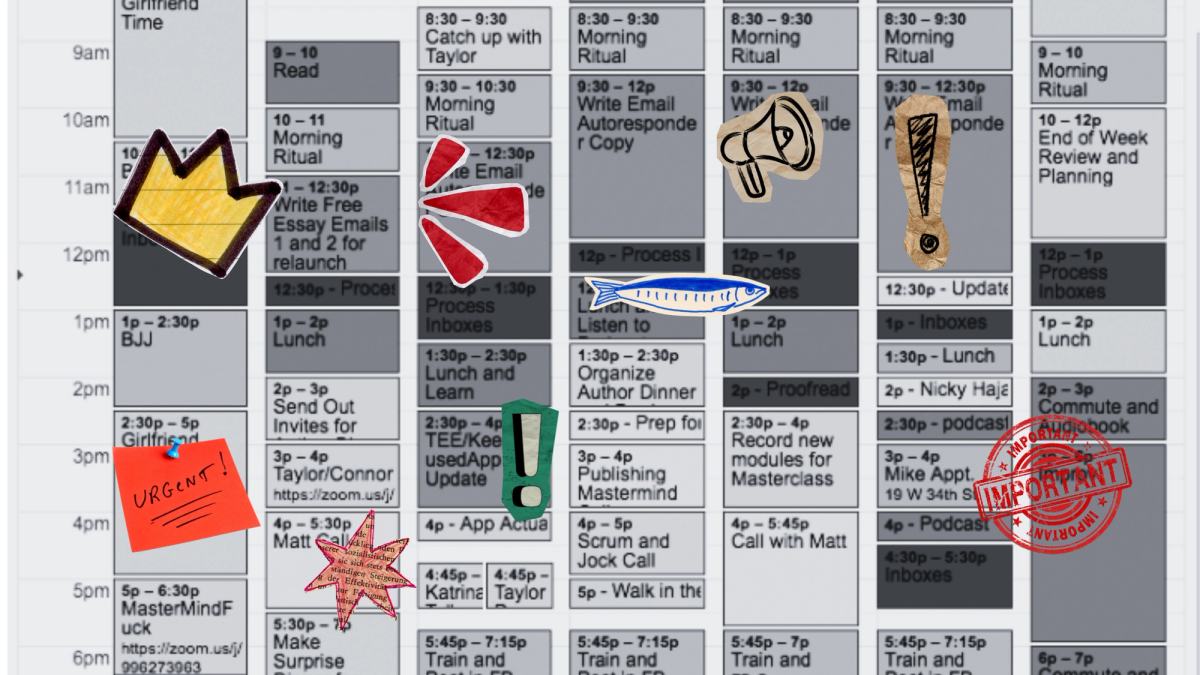
What recurring meetings reveal about organizational culture, decision-making, and the way work actually gets done.
At a previous company, when I was just hired as Head of Marketing, the COO made it very clear that I was expected to attend a three-hour recurring operations meeting. Non-negotiable.
I was new, perhaps a little naive, but mostly curious. I figured there must be a good reason for having marketing in the room, and I was happy to learn.
So I attended. Once, twice, three times.
By the third meeting, I was struggling to understand what I was doing there. I contributed very little, and apart from some useful exposure to other teams' challenges, I wasn't getting much out of it either.
It took me a while to understand what was actually going on.
The COO and CRO, who was my manager, had a history of disagreements over marketing's performance. From the COO's perspective, marketing didn't understand the business well enough, and having the Head of Marketing sit through operations meetings was the solution.
I can appreciate the intention. If marketing is disconnected from the business, that's a real problem worth addressing.
But somehow, years of unresolved disagreements about marketing had been passed down to me in the form of a three-hour recurring meeting.
The meeting was a duct-tape fix for something much deeper.
What your meeting calendar reveals about your organization
That experience changed the way I look at meetings. I suspect an organization's calendar can reveal things its org chart never will.
Who gets invited to everything? Who needs to approve every decision? Who attends meetings just to stay informed, or because someone doesn't trust the work to happen without them?
And how many recurring meetings have simply outlived the problems they were originally created to solve?
Our calendars can reveal unclear decision rights, poor information flow, unresolved disagreements, and sometimes a lack of trust. A meeting that looks like an ordinary status update might actually exist because two departments stopped communicating effectively years ago.
There's a measurable cost to inefficient meetings, too. Microsoft's 2023 Work Trend Index found that 68% of respondents lacked sufficient uninterrupted focus time during the workday. Inefficient meetings ranked as the number one productivity disruptor.
Rebecca Hinds, in Your Best Meeting Ever, makes the case for designing meetings with the same intentionality we bring to designing products.
I agree. But before redesigning a meeting, I'd want to understand why it exists in the first place.
If everyone attends because that's the only way to access information, perhaps we have a transparency problem. If decisions keep getting escalated, maybe decision rights aren't clear. And if people insist on being in every conversation, perhaps there's something worth examining about trust.
I love a good meeting. Some of the best work I've experienced happened when people came together and figured out something none of us could have solved alone.
But I wonder how many meetings we could eliminate simply by fixing the way work happens around them.
If I were examining an organization's ways of working, I'd start by putting its calendars under a microscope.
Not just to find out which meetings we could eliminate, but to understand which organizational problems those meetings have been quietly compensating for.
References
- Rebecca Hinds, Your Best Meeting Ever: 7 Principles for Designing Meetings That Get Things Done, Simon & Schuster, 2026.
- Microsoft, 2023 Work Trend Index: Will AI Fix Work?, May 9, 2023.